Under the sink
Cabinet-door spray hangers: trigger necks, not a spice rack
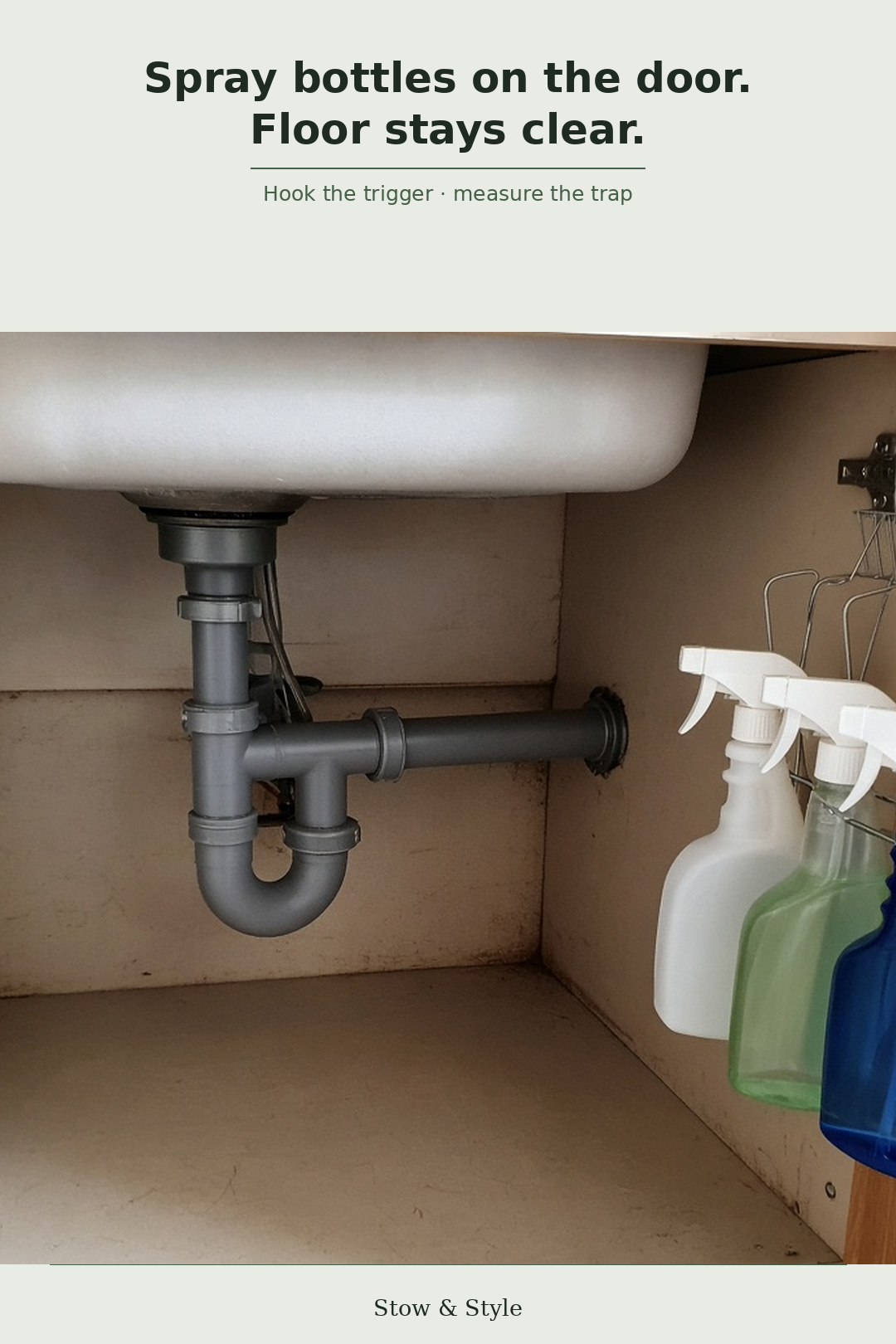
Over-door spice racks are for 4-inch jars. Spray hangers are a different door job: hook the trigger neck, keep the bottle off the wet floor, and still close the cabinet. If you hang glass cleaner on a spice rack, the bottles will not seat, the door will not shut, or both.
Wire over the door, not solvent adhesive on painted MDF. Measure first. If the bottles kiss the trap when the door is at 90 degrees, skip the hangers and use a floor caddy on the mat.
The problem
The floor is already doing too much: trap, mat, caddy, a roll of bags. Spray bottles add height and a drip. Hanging them on the interior of the door uses a plane you already own—if the door is a real slab and the bottles have trigger necks, not gallon-jug handles.
The failure mode is geometric. Open the door 90 degrees. The hanging bottles sweep an arc. If that arc hits the P-trap, the opposite-bay rack, or a disposal bulge, the hangers fail on day one even if they looked fine with the door closed in a listing photo.
How to measure
- Door thickness. Standard US cabinet doors are often about 5/8–3/4 inch. Over-door hooks need the real number plus the top gap. A hollow 1/2-inch panel will warp. Skip that door.
- Interior face to the nearest pipe. From the inside of the closed door to the P-trap or the nearest hose. That is how far the bottles may stick in. Leave extra; triggers add depth.
- Hinge-side clearance. Hinges eat the first inch of the opening. A hanger that sits on the hinge stile will bind.
- The 90-degree test (do this before you buy, with the bottles you already own). Hold two spray bottles against the interior door at hanging height. Open to 90 degrees. If they kiss PVC, skip.
Renter-safe: over-door wire, no new holes, felt where metal meets paint. Confirm the lease before any adhesive. Residue on a factory finish is a deposit conversation.
Product types
1. Over-cabinet-door spray-bottle hangers (trigger-neck)
Hooks or a thin rail that catch the trigger neck. Wire over the top of the door. Not a spice basket. Not a towel hook from the bath post.
Use if: A standard slab cabinet door, trigger-neck spray bottles, and enough interior face-to-pipe clearance that the bottles hang and the door still closes.
Skip if: Open the door 90 degrees and the bottles kiss the P-trap or the opposite-bay rack. Skip a hollow 1/2-inch panel that will warp. Skip gallon refill jugs—those necks were not made for a hook. A floor caddy on the mat is the honest move.
Fit caveat: over-door hardware adds thickness. If the door already scrapes the frame, adding hooks makes it worse. Felt the contact points. If the only bottles you own are warehouse gallons, this type is a skip, not a “maybe if I transfer them.”
2. If hangers fail: a floor caddy on the mat
Waterproof under-sink trays / small caddy
Same class as the tiny-bath wet tray. Bottles stand in a tub on the mat, trap left visible.
Use if: The 90-degree test failed or the door is too thin.
Skip if: You already have a U-caddy doing this job. Do not hang bottles and crowd the same bay.
What this is not
It is not an over-door spice rack. It is not an adhesive “no-drill” strip on a painted door in a wet cabinet. It is not a reason to skip the mat. Hang what fits. Leave the trap visible. If the tape says no, buy nothing for the door.