Pantry
Over-door pantry spice racks: measure the frame or skip
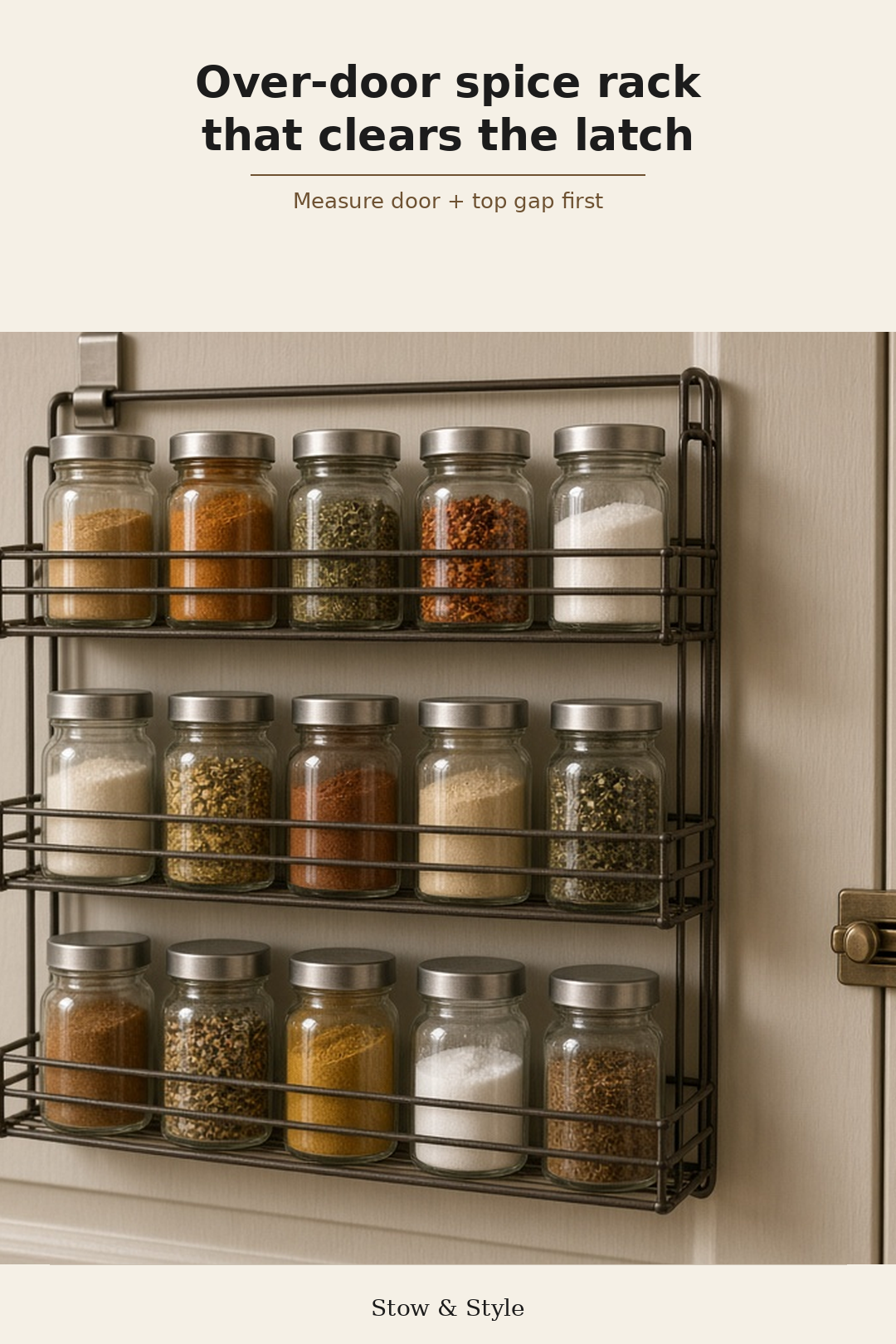
When shelves are shallow or full, the back of the pantry or closet door is unused vertical space. An over-door rack can hold spices, foil, wraps, and small cans without a drill. It can also keep the door from closing, rattle a hollow-core slab, and punch the first interior shelf every time you open it.
This is a measurement product, not a “hack.”
The problem
Over-door racks need three clearances at once: top gap (hook over the door), door thickness (hook opening), and interior depth (baskets versus shelves, cans, and the frame). Apartment doors are often 1-3/8 inches thick with almost no gap under the frame header. Pantry “doors” are sometimes bi-folds, which will not take this hardware.
Listing photos show a farmhouse pantry with 6 inches of air behind the door. Yours may have a shelf at 14 inches off the floor that eats the bottom two baskets.
How to measure
- Door type. Slab, bi-fold, louvered, sliding. Only a hinged slab is a good candidate.
- Thickness. Most interior doors: 1-3/8 inches. Vintage or fire doors can be 1-3/4. The hook’s throat must be larger than the door plus any bumper you add.
- Top gap. Close the door. Measure between the door’s top edge and the frame. If it is a credit-card gap, thick hooks will stop the latch. Some racks include a thin metal hook; those are the ones to look at—not a chunky plastic hanger.
- Interior map. Open the door 90 degrees. Measure from the inner door face to the nearest shelf edge, can, or hinge-side obstruction at every height a basket would occupy.
- Hinge side. Baskets plus spices add weight. Cheap hinges sag. If the door already drags, do not add 15 pounds of glass jars.
Renter-safe: this is one of the better renter moves—no wall holes. Protect paint with the felt that ships in the bag. At move-out, a scuff at the top edge is still possible; that is honest.
Product types
1. Shallow over-door spice rack (basket depth 3.5–5 inches)
Use if: You have a hinged slab, a usable top gap, and interior air for 4-inch baskets. Spices and extracts only.
Skip if: You wanted to store cereal. Depth will not allow it, and if you find a deeper rack it will hit the shelves. Skip bi-folds.
2. Over-door wrap and foil rack
Over-door organizer for foil, wrap, bags
Use if: Boxes of foil currently steal a whole shelf.
Skip if: The boxes are the 200-foot warehouse size. Those boxes are deeper than the door gap. Buy smaller refill boxes or keep them on a shelf.
3. Over-door caddy with adjustable baskets
Adjustable-basket over-door pantry caddy
Baskets you can slide to miss a shelf.
Use if: One shelf sticks out and you can park a gap there.
Skip if: Every shelf comes to within 3 inches of the door. Then there is no rack that works, and the honest move is a shallow shelf bin, not a door product.
4. In-cabinet over-the-cabinet-door spice rack (smaller)
Hangs on a cabinet door, not a room door. Different scale.
Use if: A kitchen cabinet door has clearance from the shelves inside (often it does not—measure with the door closing on a jar).
Skip if: The cabinet is packed or the door is thin MDF that will warp. Adhesive spice clips are a separate skip if your lease cares about finish.
Fit and noise
Hollow doors amplify rattle. A strip of thin foam where baskets meet the door helps. Do not overload the top basket; that is the loudest and the first to dump when the door stops against a wall.
If the door no longer latches, the hook is too thick—return it. Do not plane a rental door.
Under $50 is realistic for a decent rack. If spices still do not fit, the next step is the spice-drawer post or fewer bottles, not a second rack on the other side of the same door.
Looks expensive: one metal finish, jars in a single height class, empty baskets left empty instead of filled with mismatched mugs. The door should still close with two fingers.