Under the sink
Under-sink sliding organizers vs. the P-trap
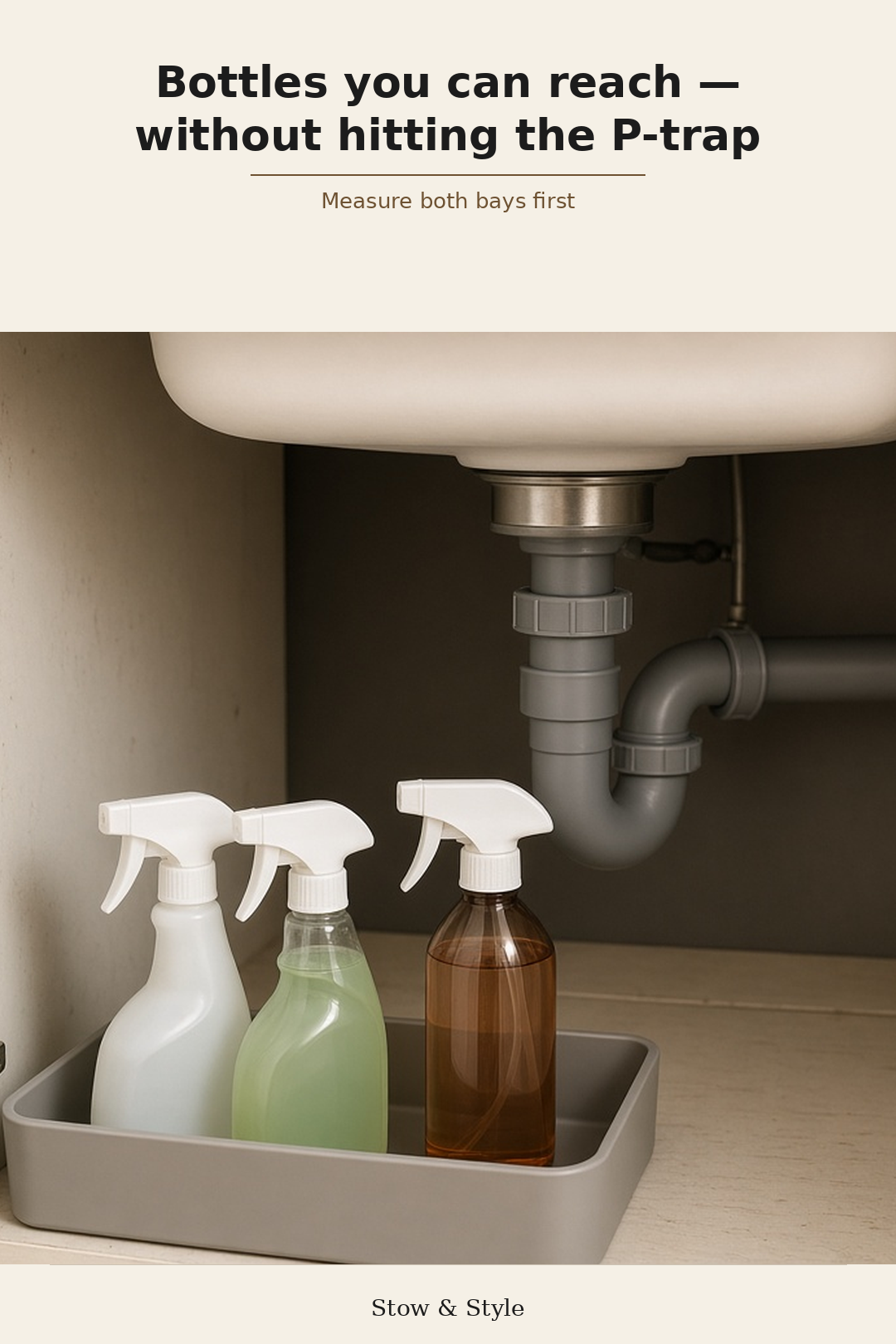
The under-sink cabinet is not a rectangle. It is a box with a U-shaped drain (the P-trap), two shutoff valves, sometimes a garbage-disposal bulge, and a floor that has already met a slow leak. A two-tier sliding rack that assumes a clear 22-by-16-inch bay will hit the trap on day one.
If you measure the trap first, a sliding organizer can still be the right $25–$45 buy. If you do not, it becomes a return.
The problem
Listing photos show a clean cabinet with pipes photoshopped to the back. In a US apartment, the P-trap is often centered under a single bowl, or offset under a 60/40 sink, and it hangs low—sometimes 8–10 inches off the cabinet floor. Supply lines cross the left or right bay. A dishwasher drain hose may clip in from the side.
A full-width slide then either will not install, or it installs and you lose the slide because the basket hits PVC.
How to measure
Empty the cabinet. Put a towel down. Shine a phone light.
- Trap position. From the left interior wall to the nearest point of the P-trap, and from the right wall to the trap. Also measure from the back wall to the front of the trap. You are mapping two bays, not one.
- Trap height. Cabinet floor to the lowest part of the trap or disposal. This is your max tall-item height in the center. Many sliding “bottom” trays are 3–4 inches tall; they still need to pass under or stop before that pipe.
- Valve and hose swing. Shutoffs stick out. Measure projection from the back wall. A rear-mounted slide rail fails if a valve occupies that corner.
- Cabinet opening vs. interior. The face frame eats an inch per side on older cabinets. Rails that mount behind the face need the true interior width.
- Floor condition. Soft particle board means you should not screw into it. It also means a waterproof mat (next post) is not optional.
Renter-safe: prefer tension / expandable or freestanding caddies that sit on a mat. Screwing slides into a rental cabinet is extra holes plus a chance of hitting a water line. If a kit only works with screws, that is a skip unless you own the box.
Product types
1. Two-bay under-sink caddy that leaves the trap in the middle (Kitstorack-class)
Under-sink caddy with U-cutout or two towers
Left tower, right tower, open channel for the trap. Sometimes a small top shelf that bridges behind the trap.
Use if: Your trap is roughly centered and you have at least 8 inches of width on one side for bottles.
Skip if: The trap is hard against the left wall (common with a disposal on the other side). Then you have one bay, not two. Buy a single-side slide, not a “fits all sinks” U-frame.
2. Single-side sliding drawer
Narrow sliding basket, 8–11 inch width
One rail set, one basket, lives in the wider bay.
Use if: One side of the trap is usable and you want spray bottles reachable without kneeling into the pipes.
Skip if: Both bays are under 7 inches. A slide’s rails have thickness. You will buy a drawer that does not slide.
Fit caveat: “11 inch” often means the basket, not the rails. Rails can add an inch. Measure the installed width.
3. Freestanding pull-out caddy (no screws)
Freestanding under-sink pull-out
Sits on the floor, you drag it. Less elegant, fully reversible.
Use if: You cannot drill, the floor is uneven, or you move in 11 months.
Skip if: The cabinet floor is slick and the caddy has cheap plastic feet—it will skate when you pull a bottle. Pair with a mat. Skip also if the caddy height hits the trap; the whole point is to stay beside the U.
4. Stackable bins that are not sliders
Short waterproof bins, left/right pair
Not every under-sink needs slides. Two bins you lift out can be calmer and cheaper.
Use if: You go under the sink weekly, not hourly, and slides feel like a solution to a photo.
Skip if: Mobility is an issue and lifting a wet bin is the hard part—then a true slide in the clear bay is worth it.
Returns and leaks
If the listing says “adjustable to your pipes” and your pipes are a disposal plus a centered trap plus a hose, assume it is not adjustable to your pipes until the inches agree.
Never store anything you cannot replace on the bare particle-board floor. A slow leak plus cardboard is a landlord conversation.
No chrome palace required. One quiet caddy in the wide bay, bottles facing forward, and the trap left visible so the next leak is obvious—that is the finished under-sink.